Horse X-Rays in a Pre-Purchase Exam: How to Read Them

Reading time: 9 minutes
Everything seemed perfect when buying a $38,000 warmblood mare, until the vet reviewed the pre-purchase X-rays. Two chips in the fetlock joint and early arthritis in the hock. The dream of a show partner shattered in seconds. Experiences like this are not rare when buyers don't understand X-ray findings or skip a professional pre-purchase exam.
The pre-purchase exam with X-rays is standard when buying a horse and protects against costly wrong decisions. But what do the findings really mean? Which deviations are acceptable and which should make you call off the sale immediately? Interpreting the images correctly can make the difference between a healthy athletic partner and years of vet bills.
The standard X-ray series for a pre-purchase exam
In 2018, the German Society for Equine Medicine (GPM) published a clear recommendation for X-rays in the pre-purchase exam. The so-called small series includes 10 views of the front limbs and costs an average of $400 to $550. The large series of 18 views, including the hind limbs, runs $700 to $1,000.
The standard program includes views of the toes in three planes, the fetlock joints, the sesamoid bones and the hocks. Especially with expensive sport horses such as a dressage horse, buyers should never skip this exam. The investment protects against much higher follow-up costs.
For leisure horses under $5,500, a reduced series may be enough. The exam then focuses on the most important areas such as the front feet and hocks. The German Equestrian Federation (FN), however, generally recommends the extended X-ray series for all horses with a purchase price over $11,000.
Understanding X-ray grades and placing them correctly
Many buyers stumble over how X-ray findings are classified. The four-class grading system comes from the Netherlands and was adopted by the X-ray guidelines for pre-purchase exams. Class I means no deviations, Class II minor changes without clinical relevance.
It gets critical at Class III, with distinct changes that may impair use. A Class IV finding shows severe changes that will very likely lead to lameness. A 2019 study by the University of Veterinary Medicine Hannover showed that 73 percent of the warmbloods examined had at least one Class II finding.
The X-ray class alone must never decide the purchase. A young horse with Class II findings in the hock can go for decades without problems, while the same changes may already be critical in a 12-year-old show horse. The assessment must always take age, intended use and clinical findings into account.
Typical X-ray findings and what they mean
Chips in the fetlock joint are among the most common findings in jumping horses. These bony fragments often result from overload and can be rated differently depending on size and location. A chip under 5 millimeters (about 0.2 inches) in diameter with no joint involvement is usually classed as Class II.
Spavin changes in the hock affect dressage horses in particular. In 2020, the University Equine Clinic in Vienna documented that about 40 percent of all dressage horses over 8 years old show mild spavin changes. What matters is the exact location and whether joint fusion has already begun.
Signs of laminitis on an X-ray are an absolute deal-breaker. Sinking of the tip of the coffin bone or rotation of the coffin bone point to structural damage that never fully heals. Even with bargain offers, buyers should consistently walk away here.
What X-rays in a pre-purchase exam really show
Horse X-rays document bony structures only. Soft tissues such as tendons, ligaments or bursae remain invisible. Assessing those requires an ultrasound exam, which costs an additional $220 to $380.
The images also show only the condition at the time of the exam. Nobody can predict with certainty how existing changes will develop. An experienced equine vet can, however, give a prognosis based on the location and type of the changes.
Comparing both sides of the body is especially important. Asymmetries between the left and right leg often point to stress-related changes. The equine clinic at Ludwig-Maximilians-University Munich stresses the importance of this comparative analysis in its 2021 guidelines.
The right evaluation by the vet
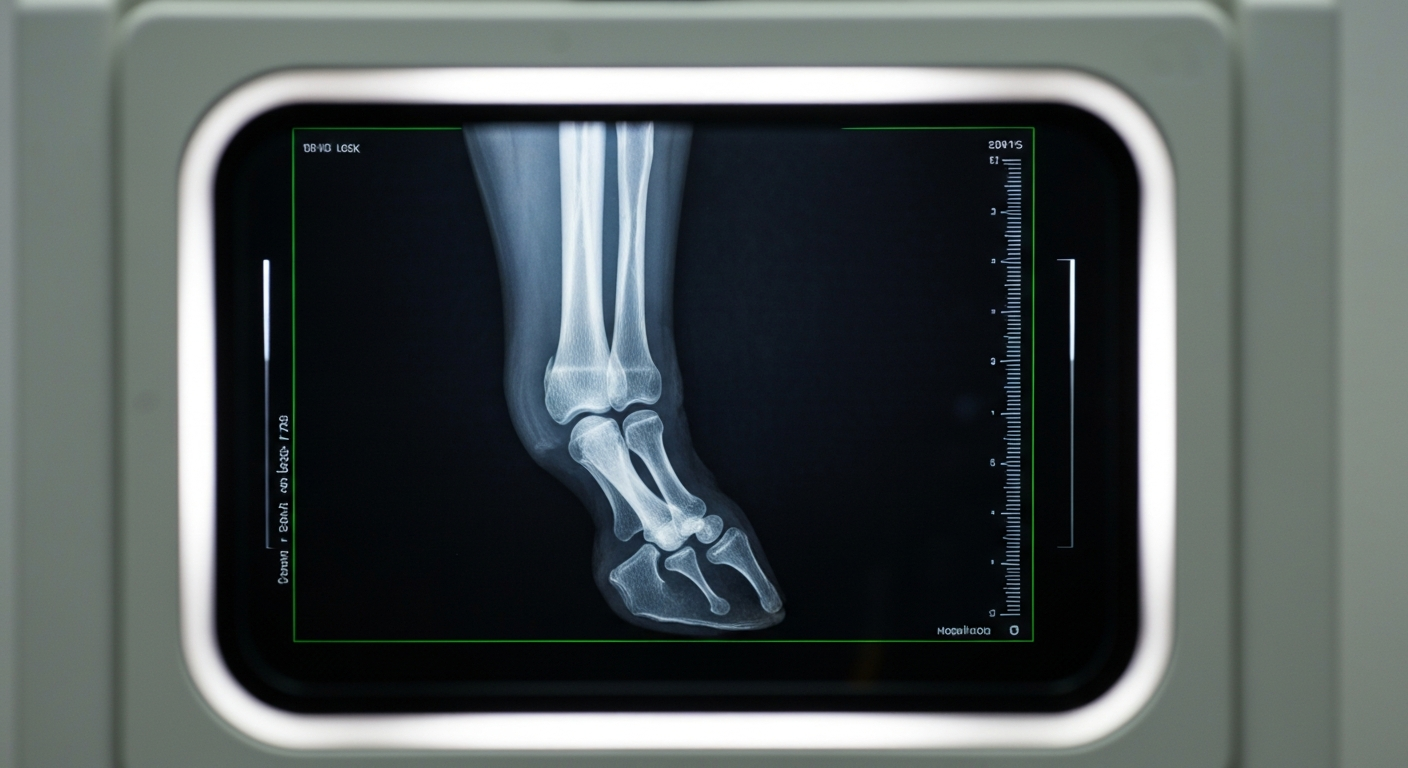
Not every vet has enough experience interpreting pre-purchase X-rays. Specialized equine clinics that perform at least 500 pre-purchase exams a year offer the safest evaluation. Board certification in equine practice or surgery is a good sign of well-founded expertise.
The written X-ray report should never consist of blanket wording. Every deviation must be described precisely, with position, size and possible clinical relevance. Professional vets explain the findings in a personal conversation and answer all your questions.
A second opinion can make sense for critical findings. The cost of $165 to $275 for an outside review of existing X-rays is a good investment for a horse in the five-figure price range. What matters is that the second reviewer is independent of the seller.
When you should walk away from the sale
Certain X-ray findings are clear deal-breakers regardless of the purchase price. These include advanced laminitis damage, coffin bone fractures and severe arthritis in weight-bearing joints. Buyers should also be very cautious with multiple Class III findings.
In young horses under 5 years, even distinct signs of wear are a warning. A 4-year-old mare with Class III spavin findings has probably already been worked hard. Such horses often develop problems earlier than normally used peers.
Intended use also plays a central role. A leisure horse with minor chips may well be suitable, while the same horse is out of the question for ambitious show jumping. If you want to make your dream of owning a horse come true, you should communicate your planned use honestly.
Practical tips for the X-ray exam
You should schedule the appointment at least a week in advance. Reputable equine clinics are often booked weeks ahead. With X-rays and the clinical exam, the appointment takes about 2 to 3 hours.
Buyers have the right to be present at the exam. You should definitely use this opportunity to ask questions directly and watch the horse in unfamiliar surroundings. Many clinics also allow a second trusted person, such as an experienced riding instructor.
- Request the X-rays in digital form on a CD or by email
- Have the written report sent to you within 48 hours
- Clarify in advance whether the fees are due even if the findings are negative
- Agree on a fixed price for the whole exam including all views
- Document any previous illnesses of the horse in writing before the exam
X-ray findings and negotiating the purchase price
Minor Class II findings do leave some room to negotiate the purchase price. A reduction of 10 to 20 percent is realistic with several Class II findings. On a horse offered at $16,500, that can save $1,650 to $3,300.
Factual arguments based on the vet's findings matter. Emotional discussions rarely succeed. Professional sellers usually know their horses' X-ray findings and have already priced accordingly.
For more serious findings, a clause in the purchase agreement allowing a repeat vet exam within 14 days of purchase is advisable. This legal protection guards against nasty surprises if findings develop differently than predicted.
Digital X-ray technology and modern diagnostics

Modern equine clinics work exclusively with digital radiography. It provides better image quality and immediate availability of the images. Radiation exposure for horse and staff is significantly lower than with conventional X-ray machines.
Cloud-based diagnostic systems allow access to comparison images from large databases. The Domäne Karthaus veterinary clinic in Dülmen, Germany has used an AI-assisted system since 2020 that automatically flags typical changes. The final assessment, however, is always made by experienced vets.
Teleradiology services offer a second opinion within 24 hours. Specialized radiologists review the images and produce a detailed report. These services cost between $110 and $220 and add extra confidence to the buying decision.
Avoiding common interpretation mistakes
The biggest mistake is equating an X-ray finding with lameness. Many horses with distinct changes on X-ray stay sound for years. Conversely, lame horses can have completely unremarkable X-rays when soft tissue damage is present.
The horse's age is often misjudged too. A 15-year-old leisure horse with mild signs of wear is normal, while the same findings in a 6-year-old are critical. The assessment must always be adjusted for age.
Many buyers compare the X-ray findings of different horses directly. That approach is problematic, since each horse has to be assessed individually. Breed, use history and genetic factors play an important role in interpretation.
Insurance relevance of X-ray findings
Equine health insurers increasingly require current X-rays before signing a policy. Existing findings often lead to exclusions of certain body areas or risk surcharges of 20 to 50 percent on the premium. Allianz documented in 2022 that 35 percent of all applications are adjusted because of pre-existing conditions.
Complete X-ray documentation at purchase makes later insurance applications much easier. Missing images can cause problems if illnesses appear later. Insurers then often argue that pre-existing damage cannot be ruled out.
When making your buying decision, you should factor in potential insurance costs. A horse with several Class II findings can cause $2,200 to $5,500 more in insurance premiums over its lifetime.
Frequently asked questions about X-rays when buying a horse
How do I read X-ray findings correctly when buying a horse?
X-ray findings should always be interpreted by a specialized equine vet. Pay attention to the X-ray classification, the horse's age and the intended use. Have every finding explained in detail and don't hesitate to ask questions. A second opinion is recommended for critical findings.
Which X-ray views make sense when buying a horse?
The small series with 10 views of the front limbs is the minimum. For sport horses over $16,500, the large series with 18 views, including the hind limbs, should be chosen. For leisure horses, you can decide case by case, though toes and hocks should always be examined.
What do chips on an X-ray mean when buying a horse?
Chips are bony fragments, mostly in the fetlock joint. Small chips under 5 millimeters with no joint involvement are often unproblematic and classed as Class II. Larger chips or those involving the joint can lead to arthritis and should be judged critically. The exact location and size determine the prognosis.
Are X-rays necessary for every horse purchase?
For horses with a purchase price over $5,500, X-rays are strongly recommended. Even with cheaper horses, the exam protects against high follow-up costs. Only for very old horses bought purely as leisure companions with no athletic ambitions can they be skipped in individual cases.
When should I walk away from buying a horse because of X-ray findings?
You should walk away in the case of laminitis damage, coffin bone fractures, severe arthritis and multiple Class III findings. Caution is also called for with young horses under 5 years with distinct signs of wear. Ask your vet for a clear recommendation.
Conclusion: a safe buying decision through professional X-ray diagnostics
Horse X-rays at purchase are no guarantee of a healthy horse, but an indispensable tool for minimizing risk. An investment of $400 to $1,000 protects against bad purchases in the five- to six-figure range. What matters is professional interpretation by experienced equine vets and a realistic assessment of the results.
Perfect X-rays are rare, especially in horses over 8 years. Minor Class II findings are no deal-breaker if they fit the age and planned use. The combination of clinical exam, X-ray diagnostics and honest advice makes for a well-founded buying decision.
Use the comprehensive information on our site, learn about all aspects of buying a horse and get professional advice. Only then does buying a horse become the start of a long, healthy partnership instead of a financial fiasco.