Horse Purchase Agreement: Drafting Condition Clauses Right

Reading time: 6 minutes
A horse is sold as "spook-proof," but shies at every trash can on its first trail ride. Without a clear condition clause in the horse purchase contract, the buyer is left empty-handed. That's exactly why the wording of this clause often decides whether any later claims can actually be enforced.
Many buyers and sellers underestimate how precisely a condition clause in a horse purchase contract needs to be worded. Vague promises like "healthy and well-trained" usually don't hold up in court. If you want to pin down a horse's qualities in a contract, you need concrete, verifiable statements instead of marketing language.
What exactly is a condition clause in a horse purchase contract?
A condition clause is the part of the purchase contract where both parties specify which qualities the horse actually has. This is a core part of horse purchase law and contract drafting practice: if no such agreement exists, the so-called objective standard applies, meaning whatever a buyer could reasonably expect based on the type of animal.
The problem is that "reasonable" is a flexible concept when it comes to horses. A pleasure horse doesn't need to be show-ready, but a mid-level dressage horse should at least demonstrate certain basic gaits. This is precisely where a well-drafted condition clause creates the clarity that would otherwise be missing.
The difference between a guarantee and a sales pitch
Not every verbal statement made during a viewing automatically becomes part of the contract. If the seller says "this horse is a dream for beginners," that's often just a promotional remark with no legal weight. Only what's written into the contract as a defined quality counts as an agreed condition if a dispute arises.
What qualities belong in the horse purchase contract?
When drafting the agreement, distinguish between objectively measurable qualities and subjectively assessed ones. Measurable facts like height, age, or pedigree are easy to include in the contract. It gets trickier with temperament, training level, or health guarantees.
- Name the intended use specifically: instead of "trail-ready," write "has been ridden regularly on trails for two years, accustomed to road traffic"
- Tie health status to the Pre-Purchase Exam: "according to X-ray findings from March 14, 2024, no issues in the fetlock joints or navicular area"
- Specify training level with timeframe: "reliably shown under saddle in introductory-level dressage tests, last competed in June 2024"
- Give context for temperament: "gets along well with other horses in open housing, has never bitten or been bitten"
If you're buying a riding horse, you should also thoroughly check its temperament before a trial ride, before anything even goes into the contract. Only what you've personally observed can later be credibly claimed as an agreed-upon quality.
Sample wording for a legally sound condition clause
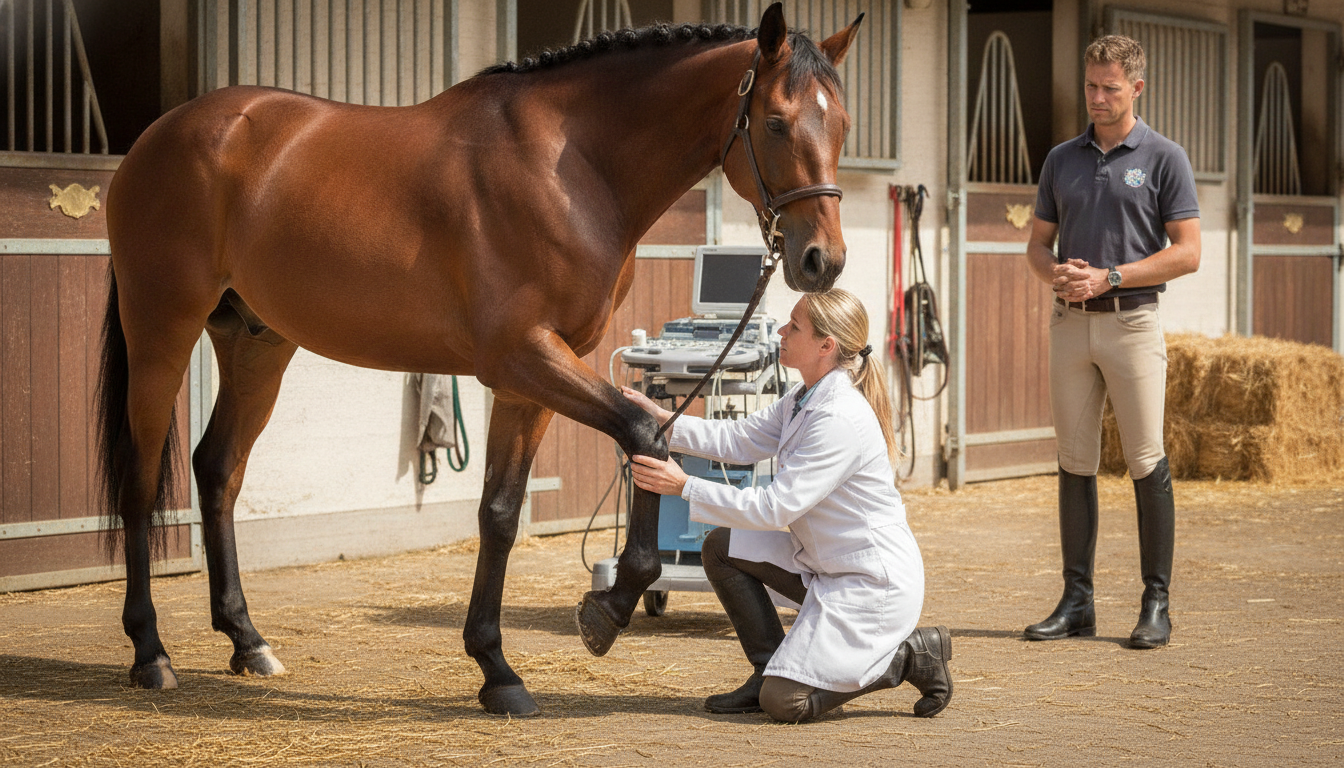
Courts increasingly demand precise wording instead of blanket assurances. A sentence like "the horse is healthy" is often considered too vague to establish liability for defects. It's better to link the statement to specific exam results or dates.
Here's an example of workable wording: "The seller guarantees that the mare is free of lameness at the time of handover and has received no veterinary treatment for orthopedic issues within the past six months." This wording is verifiable and time-bound. That sets it apart from vague statements that turn out to be worthless in a dispute.
Precision pays off with use cases, too. Instead of "suitable for pleasure riding," write: "has been ridden exclusively on trails and in the arena since January 2023, no show experience." This kind of wording leaves little room for interpretation.
Why the Pre-Purchase Exam should become part of the agreement
Pre-Purchase Exam results can be built directly into the condition clause. That turns a loose vet report into a binding part of the contract. The right scope of exam depends on intended use and purchase price, as explained in more detail in our article on Pre-Purchase Exam Levels.
Excluding liability for defects: where are the limits?
Many sellers want to exclude liability for defects as broadly as possible. Between private individuals, this is generally allowed, but it has clear limits. A blanket disclaimer doesn't hold up if a specific quality was agreed upon and that quality turns out to be false.
An example illustrates the tension: if the contract guarantees "spook-proof, suitable for beginner riders" and the horse turns out to be completely unsuitable for beginners, a general liability disclaimer won't help the seller. The specific promise overrides the general exclusion. You can find more on the legal limits of such clauses in our article on liability disclaimers in horse purchases.
For buyers, this means: the more precisely the condition clause is worded, the harder it becomes for the seller to later rely on a blanket exclusion. That makes careful wording the single most important protective tool in the entire purchase contract.
The role of a trial period for disputed qualities
If a trait like rideability or compatibility with other horses is hard to verify beforehand, a contractually agreed trial period is a good option. This lets you test the horse under everyday conditions before the purchase becomes final. Our article on the horse purchase trial period explains in detail how to set this up in a legally sound way.
Avoiding common wording mistakes

A common mistake is mixing factual claims with pure value judgments in the same sentence. "The horse is very well-behaved and has never hurt anyone" blends a subjective assessment with a verifiable fact. It's better to separate the two statements, each with a clear reference to timeframes and observations.
Wording that targets the future instead of the present is also risky. "Will develop well for competitive riding" isn't a condition, it's a prediction, and predictions carry almost no legal weight. A condition clause should always refer to the horse's state at the time of handover, not hoped-for future development.
If you're unsure which clauses belong in a horse purchase contract overall, our article on horse purchase contracts and liability for defects offers a solid overview of how the individual contract components work together.
Frequently asked questions about condition clauses in horse purchases
What happens if the agreed-upon quality is missing?
If a guaranteed quality is missing, this constitutes a material defect under horse purchase law. The buyer can then demand correction, a price reduction, or in some cases, cancel the purchase contract entirely.
Is a verbal promise enough when buying a horse?
Verbal promises are hard to prove and are often not recognized in court. Important qualities should therefore always be put in writing in the purchase contract.
Can liability for defects be fully excluded when buying a horse?
Between private individuals, a broad exclusion is possible, but it's heavily restricted when a commercial seller sells to a consumer. Specifically agreed-upon qualities usually remain relevant to liability even with an exclusion clause in place.
What role does the Pre-Purchase Exam play in the condition clause?
The Pre-Purchase Exam provides verifiable findings that can be written directly into the contract as agreed conditions. This makes health guarantees far more solid than mere verbal statements.
When does wording count as too vague?
Wording without a timeframe, measurement, or specific reference point is often considered too vague for a condition clause. Courts expect verifiable, clearly defined statements rather than blanket descriptions.
Conclusion: careful wording pays off
A well-drafted condition clause isn't just legal boilerplate, it's the heart of a fair purchase contract. It protects buyers from nasty surprises and sellers from unjustified claims. The more concretely qualities are backed up with dates, exam results, and observations, the more solid the agreement will be if a dispute arises.
Take the time before signing to name every important quality precisely and put it in writing. If in doubt, it helps to review further articles on liability for defects and the right of rescission when buying a horse to better assess your own position.