Riding Club Board: Duties and Responsibilities

Reading time: 11 minutes
A riding club board carries far more responsibility than most people assume. While visiting Hollow Creek Riding Club in Lexington last week, I saw firsthand how president Sandra Miller juggled a barn walk-through, insurance questions and organizing the upcoming regional championship show. That reality shows that a riding club board position is a demanding leadership role that combines legal know-how, organizational skill and genuine passion for equestrian sport.
The German Equestrian Federation (FN) counted 7,374 equestrian clubs in Germany in 2023, with about 662,000 members in total. Every one of these clubs needs a functioning board that runs club leadership professionally while keeping both legal requirements and members' interests in view.
What exactly are the duties of a riding club board
The board of a riding club acts as the club's legal representative under its bylaws and state nonprofit law, and so carries the main responsibility for all legal transactions. Unlike commercial riding businesses, volunteering in equestrian sport is based on unpaid, voluntary commitment. The duties fall into strategic, operational and legal areas.
Strategically, the board develops the club's long-term direction. This includes setting club goals, planning investments in riding facilities and recruiting members. Pinecrest Riding and Driving Club in Virginia, for example, decided under its board's leadership in 2022 to build a new indoor arena for $420,000 after storm damage destroyed the old one.
Operationally, the riding club board coordinates day-to-day running. That includes overseeing stall occupancy, organizing training times, coordinating with riding instructors and planning shows. At larger clubs such as Rosewood Riding Club in California, with more than 600 members, this means managing 85 stalls, 4 riding instructors and an annual calendar of 12 shows.
Core legal duties and authority to represent the club
Legal responsibility includes safeguarding the club's nonprofit status, complying with animal welfare laws and keeping proper books. Under IRS rules, a tax-exempt organization must use its assets exclusively for its stated exempt purposes. A violation can lead to loss of tax-exempt status, as happened in 2021 to a riding club in Connecticut that misused sponsorship money.
The board represents the club in court and out of court. When signing contracts for feed, insurance or services, the board acts on behalf of the club. Liability is a critical aspect here: while the club as a legal entity is primarily liable, board members can be held personally responsible in cases of gross negligence or intent.
Board elections at a riding club: how to become part of the leadership
Board elections at a riding club are held by the membership and governed by the club's bylaws. Typically, board members are elected for 2 to 3 years. At the state horse council in Ohio, for example, the term is 4 years, while smaller clubs often prefer two-year cycles.
Requirements for running vary by club. Most require at least one year of membership, being of legal age and riding experience. St. George Riding Club in Boston additionally requires proof of a basic horse-knowledge certification. If you're interested in a riding club board position, you should first work on committees to get to know the club's structures.
The election itself follows democratic principles. Candidates introduce themselves, and voting is by secret ballot or open show of hands. A simple majority is usually enough. After the election, the new board's details generally need to be updated with the state, such as in the club's annual report to the Secretary of State, so that signing authority is clear.
Board structure: dividing the roles within the team
A riding club board consists at minimum of a president and a vice president. Larger clubs expand the board with a treasurer, secretary and sports director. At the Hudson Valley Riding and Driving Club, the board has 7 people including a youth director and a publicity director.
The president runs the business, chairs board meetings and represents the club externally. The treasurer manages the finances, prepares annual statements and monitors incoming dues. The sports director coordinates shows and clinics, while the youth director looks after developing young riders. This division of labor makes for efficient club leadership.
Rights and duties of the board at an equestrian club
The board's rights derive from the bylaws, the law and decisions of the membership. The board has the right to decide independently on day-to-day business as long as it stays within the bylaws. It can sign employment contracts with riding instructors or barn staff and hire service providers.
The board may exercise house rules and impose sanctions for rule violations. In 2022, Brookfield Riding and Driving Club expelled a member who repeatedly violated barn rules. Such decisions have to be proportionate, though, and must keep avenues of appeal open.
The duties include the duty of care. Board members must act with the care of a prudent person in the same position. In practice that means keeping proper books, reporting regularly to the membership and making transparent decisions. State horse councils recommend quarterly board meetings with minutes taken.
Financial management and budget responsibility
Financial responsibility is one of the most delicate duties. The riding club board prepares the budget, which has to be approved by the membership. A mid-sized riding club with 150 members typically manages an annual budget of $90,000 to $135,000 from dues, stall rentals and entry fees.
Auditing is done by elected auditors who act independently of the board. If discrepancies arise, the membership can refuse to approve the board's reports, which is effectively a vote of no confidence. Southside Riding Club experienced this in 2020, when unclear expenses of $14,000 led to a new election of the entire board.
- Preparing and monitoring the annual budget with detailed cost planning for feed, bedding, insurance and maintenance
- Monthly checks of incoming payments and consistent follow-up with members who are behind on dues
- Negotiating with suppliers and service providers to optimize club costs at the same quality
- Ensuring proper tax filings for tax-exempt organizations, such as the annual IRS Form 990
- Transparent communication of all major expenses over $2,000 to the membership
Riding club board liability and legal protection
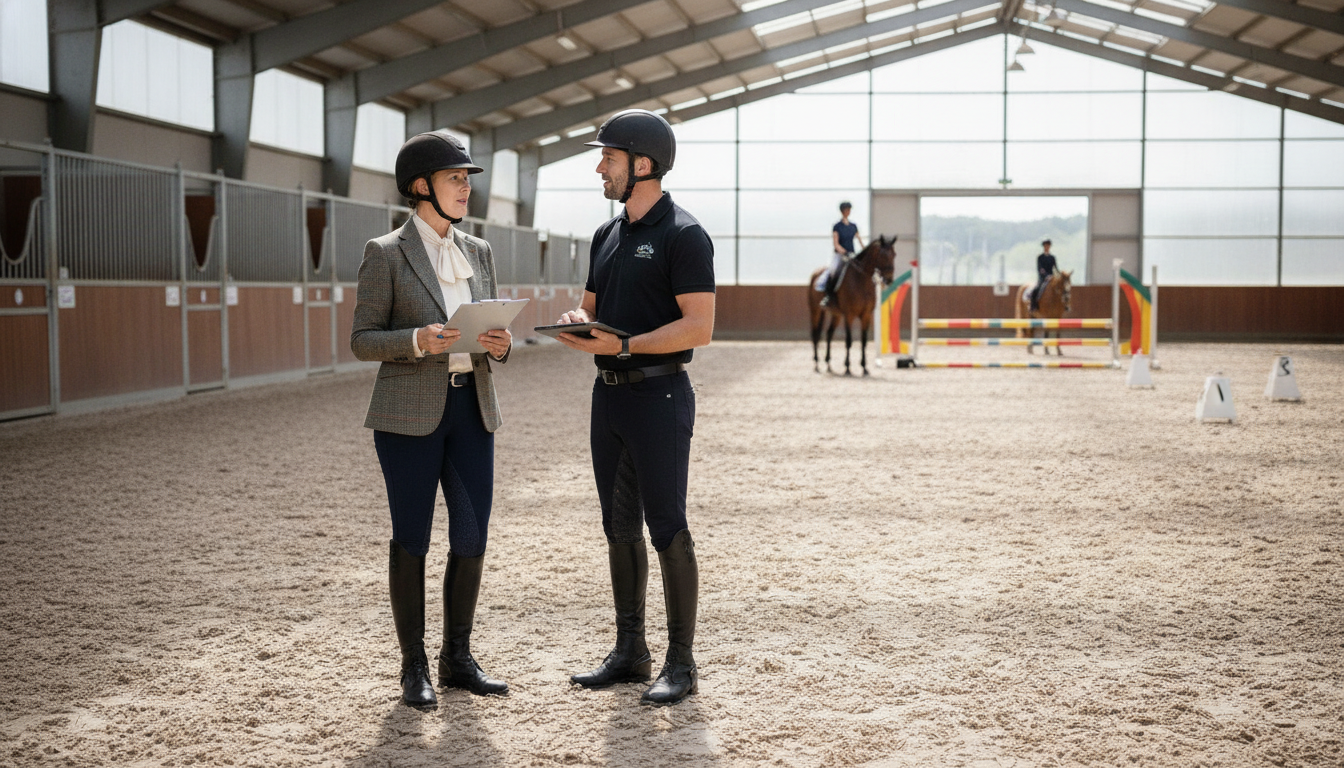
The question of liability occupies many potential candidates for a board position. In principle, the club as a legal entity is liable first, with its club assets. Personal liability of board members applies in cases of breach of duty. In 2019, a court ordered a club president to pay $50,000 in damages because he had commissioned an overpriced new arena without the membership's approval.
D&O insurance (directors and officers) protects board members from personal liability risks. This policy costs a mid-sized riding club between $900 and $1,700 a year and covers losses of up to $3 million. Specialty insurers offer special rates for sports clubs, some of which also include grossly negligent conduct. Federal and state volunteer protection laws can also offer some protection to unpaid volunteers, though those protections have limits.
Criminal risks exist for violations of animal welfare laws or for tax evasion. A riding club board member in New York was convicted of negligent bodily harm in 2021 after a horse fell ill because of poor stall care and infected a child during a riding lesson. Such cases are rare but show the importance of proper animal care.
Insurance coverage and risk management
Besides D&O insurance, riding clubs need several other policies. Club liability insurance is mandatory and covers damage that the club or its members cause to third parties. Premiums vary between $1,300 and $3,300 a year depending on membership size and the risks insured.
Commercial general liability for the barn facility protects against building damage or injuries on club property. Animal owner's liability insurance for club-owned lesson horses is also essential. Your horse insurance coverage should be reviewed regularly and adjusted to changing circumstances.
Time commitment and work-life balance in equestrian volunteering
A riding club board position requires 10 to 25 hours a week depending on club size. A 2022 survey by the German Olympic Sports Confederation found that 68% of club board members spend more time than they originally expected. At smaller clubs with fewer than 100 members, the time commitment is usually between 8 and 12 hours a week.
Critical phases are show weekends, annual general meetings and crisis situations. When a barn at Meadowlark Riding Club in Texas was damaged by arson in 2023, the board worked several extra hours every day for weeks on emergency housing for the horses, insurance claims and rebuilding plans.
Work-life balance requires a clear division of tasks within the board team. Successful clubs use digital tools such as club management software and messaging groups for efficient communication. In 2021, Hubertus Riding and Driving Club in Connecticut introduced a club management system and cut administrative effort by an estimated 30%.
Special challenges in leading an equestrian club
Leading a club in equestrian sport differs from other sports because of the responsibility for living creatures. Animal welfare requirements under state law must be met every day. This includes species-appropriate keeping, regular veterinary care and adequate exercise for the club's own horses.
Conflicts between members often arise over the distribution of scarce resources such as stalls or arena time. The board has to find and enforce fair solutions here. At Waterford Riding Club, an unequal distribution of arena time led 12 members to leave in 2022, which put considerable strain on financial planning.
Recruiting young members poses problems for many clubs. While commercial riding schools can react flexibly to customer wishes, clubs are often more rigidly structured. Innovative concepts such as trial lessons, flexible membership models or partnerships with schools can help. If you're a newcomer who wants to learn about the structures, you'll find more information in joining a riding club.
Digitalization and modern club leadership
Digitalization is changing club work too. Online booking systems for riding lessons, digital member management and social media communication are part of modern club management. Since 2020, Eastside Polo and Riding Club has used an app for stall bookings, which cut conflicts over riding times by 40%.
Since the pandemic, online membership meetings have been possible where the bylaws allow it. Temporary rules during the COVID-19 pandemic allowed virtual meetings, and many clubs have since written them into their bylaws permanently. State horse councils recommend hybrid formats that combine in-person and digital participation.
Practical tips for successful board work
Successful board work begins with transparent communication. Regular updates to members through newsletters, bulletin boards and digital channels build trust. Lakeside Riding and Driving Club sends out a monthly club newsletter with dates, financial figures and reports from the board, which raised member satisfaction by 35% according to an internal survey.
Delegation is essential. Not every task has to be done by the board itself. Committees for show organization, barn management or public relations take the load off and involve more members. At Hilltop Riding Club, this system has 45 of 180 members actively involved in club work.
Training sharpens legal and organizational knowledge. State horse councils regularly offer board training. A 2023 seminar called "Nonprofit Law for Equestrian Clubs" cost $95 per participant and taught the basics of liability, insurance and tax-exempt status in 6 hours.
Success factors for long-term club development
Long-term club success requires strategic planning beyond a single board term. Investment plans for facility renovations, concepts for member retention and building financial reserves secure the future. In 2021, Fairfield Riding and Driving Club developed a 10-year plan with staggered investments in the indoor arena, outdoor arenas and barn modernization.
Cooperation with other clubs, associations or municipal bodies expands possibilities. Joint show organizations share costs and workload. The Marin County horse association coordinates joint projects among 14 member clubs, so each individual club benefits from synergies.
Integrating different age groups and performance levels creates a lively club. While ambitious show riders seek success, recreational riders want relaxed trail rides. A balanced offering for both groups stabilizes membership numbers. For competition-minded members, formats like the show team are also worth considering.
Planning succession and handling board turnover
A well-ordered succession ensures continuity. The board should identify and onboard potential successors early. Mentoring programs in which experienced board members accompany new candidates make the transition easier. In 2022, a state horse council established such a program that prepares future leaders for board duties over 12 months.
In the case of resignations or conflicts, the board must stay able to act. The bylaws should contain provisions for early resignations and special elections. If positions stay vacant for long, it can paralyze club work. In 2021, Riverbend Riding Club had a six-month vacancy in the treasurer role, which led to delays in payments and reminders.
Frequently asked questions about the riding club board
How much time do I need to invest as a riding club board member?
The time commitment varies between 8 and 25 hours a week, depending on club size and position. Presidents usually invest 15-20 hours, while members at large get by with 5-10 hours. Show weekends and membership meetings require additional commitment.
Am I personally liable for club debts as a board member?
The club is primarily liable with its assets. Personal liability arises with gross negligence or intent, for example when ignoring resolutions or acting unlawfully on your own. D&O insurance protects against liability risks and costs between $900 and $1,700 a year.
What qualifications do I need for a riding club board position?
Formal qualifications are usually not required. Riding experience, knowledge of club structures and organizational talent help. Many clubs require at least one year of membership and legal age. Basic legal and business knowledge is an advantage but can be gained through training.
Can I receive compensation for expenses as a board member?
Board members of nonprofit clubs typically serve without pay, but they can usually be reimbursed for documented expenses. Any compensation must be reasonable and follow IRS rules and your bylaws, and excessive payments can endanger tax-exempt status. Many clubs therefore forgo payment entirely.
What happens if I want to resign from the board?
You can resign at any time, but you should do so in writing and with reasonable notice. Bylaws usually set notice periods of 4 to 8 weeks. In the case of an immediate resignation for good cause, the board may need to stay in office until a special election to keep the club able to act. The change should be reported to the state if required.
Conclusion: a board position as a rewarding challenge
The role of riding club board member combines passion for equestrian sport with responsible leadership. The duties range from legal obligations through financial management to strategic club development. Anyone who takes on this volunteer role actively shapes the future of the sport and creates the framework for hundreds of members.
The challenges are real: time commitment, liability risks and the occasional conflict come with the territory. At the same time, board work offers the chance to shape club culture, build networks and move the sport forward. With professional preparation, transparent communication and a committed team, a riding club board position becomes a rewarding task that goes far beyond administrative duties.
Find out about the specific requirements at your club, use the training offered by state associations and exchange ideas with experienced board members. Leading an equestrian club takes committed people who are ready to take responsibility and keep horse sport alive at the local level. Become part of this important community and actively help shape the future of your riding club.