How Much Grain to Feed a Horse: Energy Needs by Type

Reading time: 10 minutes
Anyone who feeds their horse wrong risks colic, laminitis or a drop in performance – the cause often lies in faulty grain dosing. Many horse owners go by blanket feeding recommendations without considering their horse's individual energy needs. But a warmblood in moderate dressage training has completely different requirements than a Thoroughbred in racing or a recreational pony with pasture access.
Correct grain dosing begins with calculating actual energy needs. These vary considerably by horse type, training intensity, age and metabolism. A systematic approach protects not only against health problems but also optimizes performance and saves feed costs in the long run.
Basics of Calculating a Horse's Energy Needs
In feeding practice, horses' energy needs are usually given in megajoules of digestible energy (MJ DE) per day (for reference, 1 Mcal = 4.184 MJ, the unit commonly used in the U.S.). In 2014, the German Society of Nutrition Physiology (GfE) published updated recommendations for horses that are considered the gold standard. A 1,320 lb (600 kg) warmblood at maintenance needs about 63 MJ DE daily, while the same horse in intensive training can need up to 105 MJ DE.
The calculation is done stepwise: first you determine the maintenance requirement, which covers metabolism, thermoregulation and basic functions. For adult horses this is about 0.52 MJ DE per kilogram of metabolic body weight – that is, body weight to the power of 0.75. On top of this you add the performance requirement, which depends on training intensity, plus supplements for growth, pregnancy or lactation.
High-quality roughage already covers a large part of the energy needs. According to recommendations of the German Equestrian Federation (FN), the roughage base should be at least 1.5 pounds of hay per 100 pounds of body weight (1.5 kilograms per 100 kilograms). For a 1,320 lb (600 kg) warmblood that is 20 lb (9 kg) of hay daily, which supplies about 54 MJ DE. Only when roughage alone doesn't meet the need does high-quality concentrate feed come into play.
Horse Types and Their Specific Energy Needs
Warmbloods in Sport and Recreational Use
Warmbloods are the largest group in equestrian sport and already show considerable differences within the breed. A 1,430 lb (650 kg) dressage horse at medium level (German Class M) needs about 75 to 85 MJ DE daily, while a recreational horse of the same weight with moderate exercise gets by on 65 to 70 MJ DE. The pedigree and breeding line also influences metabolic type – horses with a lot of Thoroughbred blood tend toward a higher basal metabolic rate.
When dosing grain for warmbloods, the rule is: at most 0.5 pound of grain per 100 pounds of body weight per meal. At three meals a day, that is at most 20 to 22 lb (9 to 10 kg) of concentrate in total for a 1,320 lb (600 kg) horse. In practice, though, most warmbloods in moderate training only need 4.5 to 9 lb (2 to 4 kg) to meet their energy needs.
Thoroughbreds and Standardbreds With a High-Performance Metabolism
Thoroughbreds, because of their breeding for speed and stamina, have a basal metabolic rate up to 20 percent higher than warmbloods of the same weight. A 1,100 lb (500 kg) Thoroughbred in race training can reach a daily need of 95 to 110 MJ DE. These horses use concentrate more efficiently and need highly digestible energy sources such as oats, which at about 11.5 MJ DE per kilogram is considerably more energy-rich than hay at 8 to 9 MJ DE.
The ration for Thoroughbreds requires special care: feed changes that are too fast lead to digestive problems more often than in hardy breeds. Oats remain the first choice, supplemented by oil-containing additions such as flaxseed or rice bran. Concentrate should be split into at least four meals, with no single portion exceeding 5.5 lb (2.5 kg).
Hardy Breeds and Ponies With Low Needs
Icelandic horses, Haflingers and ponies are marked by feed-conversion efficiency that evolved in sparse landscapes. An 880 lb (400 kg) Icelandic horse in recreational use often needs only 45 to 50 MJ DE daily – a need fully met by 13 lb (6 kg) of good hay and pasture access. Concentrate is usually unnecessary here or should be limited to 1 to 2 lb (0.5 to 1 kg) per day.
Overfeeding is the main problem in these breeds: according to a 2019 study by the University of Veterinary Medicine Hannover in Germany, 52 percent of the recreational horses and ponies examined were overweight. The consequences range from equine metabolic syndrome to laminitis to joint problems. For hardy breeds, therefore: concentrate only when there is a demonstrable extra need from intensive work or poor roughage quality.
Training Intensity as a Dosing Factor
Workload massively influences energy needs. The FN distinguishes four categories: light work (recreational riding, 1 to 2 hours daily) raises the maintenance requirement by about 20 percent. Medium work (dressage up to Class M, jumping up to 3 ft 7 in / 1.10 m) raises it by 40 to 60 percent. Heavy work (show sport, eventing) can raise the need by 80 to 100 percent.
A concrete example: a 1,320 lb (600 kg) warmblood has a maintenance requirement of 63 MJ DE. With light work this rises to about 76 MJ DE, with medium work to 88 to 100 MJ DE. If 20 lb (9 kg) of hay already supply 72 MJ DE, the horse in light work needs only 1 lb (0.5 kg) of oats in addition, while in medium work it needs 4.5 to 6.5 lb (2 to 3 kg) of concentrate.
When dosing grain by training intensity, flexibility is important. On days off or during breaks between shows, the amount of concentrate should be reduced accordingly. A rule of thumb: for each training day that drops out, 20 to 30 percent less concentrate. This adjustment prevents surplus energy that gets stored as fat or leads to excess spirit.
The Most Important Types of Concentrate and Their Energy Density
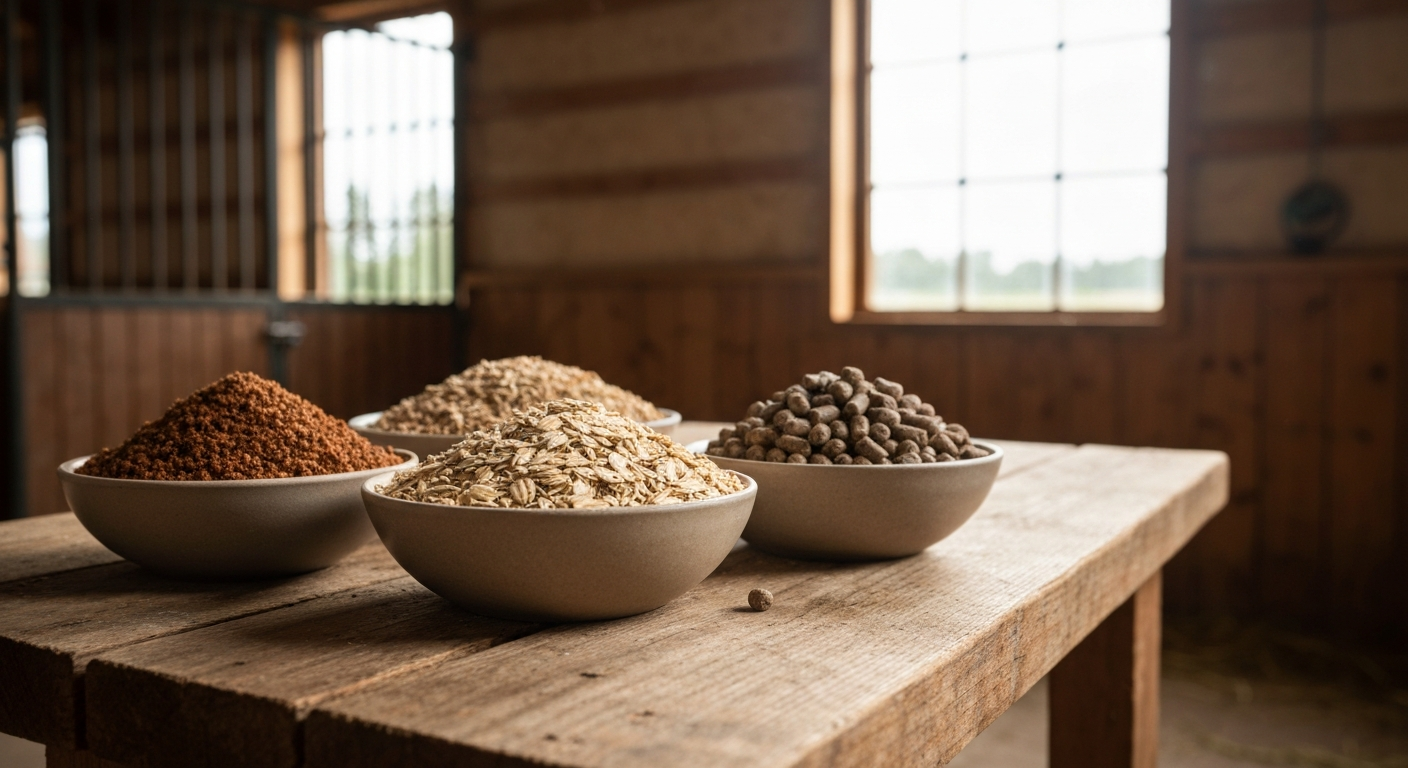
Oats are traditionally considered the ideal horse concentrate and supply about 11.5 MJ DE per kilogram with good digestibility. Their structure encourages chewing, and the starch is broken down comparatively slowly in the small intestine. For a 1,320 lb (600 kg) horse with an extra need of 20 MJ DE beyond the hay, that means about 3.75 lb (1.7 kg) of oats per day.
Barley is more energy-dense than oats (12.5 to 13 MJ DE per kilogram) but has to be crushed or heat-treated, because the hard hull would otherwise pass through undigested. Its starch reaches the blood faster, which is why barley can make nervous horses "hot." The amount required is about 15 percent lower than oats for the same energy content.
Corn offers the highest energy density among the grains at about 13.5 MJ DE per kilogram, but should never make up more than a third of the concentrate ration. Its starch is hard to digest and burdens the hindgut when overfed. Muesli-style mixes and pellets combine various components and usually contain 10 to 12 MJ DE per kilogram, depending on composition.
Practical Calculation of the Individual Ration
A practical calculation begins with determining the horse's weight. Without a scale, this formula helps: body weight in kilograms = girth² x body length divided by 11,900, with both measurements in centimeters (in inches and pounds: girth² x length ÷ 330). A horse with a 190 cm (75 in) girth and a 165 cm (65 in) length weighs about 505 kg (1,113 lb).
Then you determine the maintenance requirement: 505 kilograms to the power of 0.75 gives about 100, multiplied by 0.52 MJ DE that is a 52 MJ DE basic requirement. With medium work (50 percent supplement), the total need rises to 78 MJ DE daily. With 17.6 lb (8 kg) of hay (64 MJ DE), a gap of 14 MJ DE remains, which can be covered by 2.6 lb (1.2 kg) of oats.
The following checklist helps with practical implementation:
- Check body weight every three months and adjust the feed amount
- Assess training intensity weekly and adjust the concentrate accordingly
- Determine Body Condition Score (BCS) monthly – the ideal is 5 out of 9 points
- Have roughage quality tested, as energy content can vary between 7 and 10 MJ DE
- Split concentrate into at least three meals, never more than 0.5 pound per 100 pounds of body weight at once
Avoiding Common Mistakes When Dosing Grain
The most widespread mistake is feeding by gut feeling instead of by need. Many horse owners go by barn neighbors or manufacturer instructions, which are often calculated generously. Overfeeding by just 10 MJ DE daily – about 2.2 lb (1 kg) too much oats – at constant need leads to more than 22 lb (10 kg) of weight gain within three months.
Ignoring seasonal swings is just as problematic. In winter, energy needs rise by up to 15 percent due to thermoregulation, while in summer with pasture they fall thanks to the nutrient-rich grass. During spring shedding, horses need additional nutrients but not necessarily more energy – here a mineral feed often makes more sense than concentrate.
Another stumbling block is a lack of adjustment after training breaks. After injury or illness, the amount of concentrate should be drastically reduced while roughage stays constant. A horse on stall rest needs only its maintenance requirement, and any extra burdens the metabolism and causes restlessness.
Special Cases: Breeding, Age and Metabolic Disease
Pregnant mares need 20 percent more energy from the ninth month of gestation, and lactating mares even 50 to 80 percent above maintenance. A 1,320 lb (600 kg) mare with a foal at foot needs up to 110 MJ DE daily – an amount hard to reach without concentrate. Here 9 to 13 lb (4 to 6 kg) of high-quality muesli or oats is standard.
Seniors from about age 20 often show declining digestive performance. Their energy needs can rise by 10 to 15 percent because they use nutrients less well. At the same time, old horses tolerate large amounts of concentrate worse. The solution lies in highly digestible, energy-dense feeds such as soaked beet pulp or special senior muesli with processed grain components.
In horses with equine Cushing's syndrome (PPID) or equine metabolic syndrome (EMS), concentrate feeding has to be radically rethought. Grain-based feeds are contraindicated here because they trigger insulin spikes. Instead, fat-rich additions such as flaxseed oil or rice bran are used, which supply energy without a carbohydrate load. Affected horses should be fed under veterinary supervision.
Avoiding Overfeeding: Recognizing Warning Signs
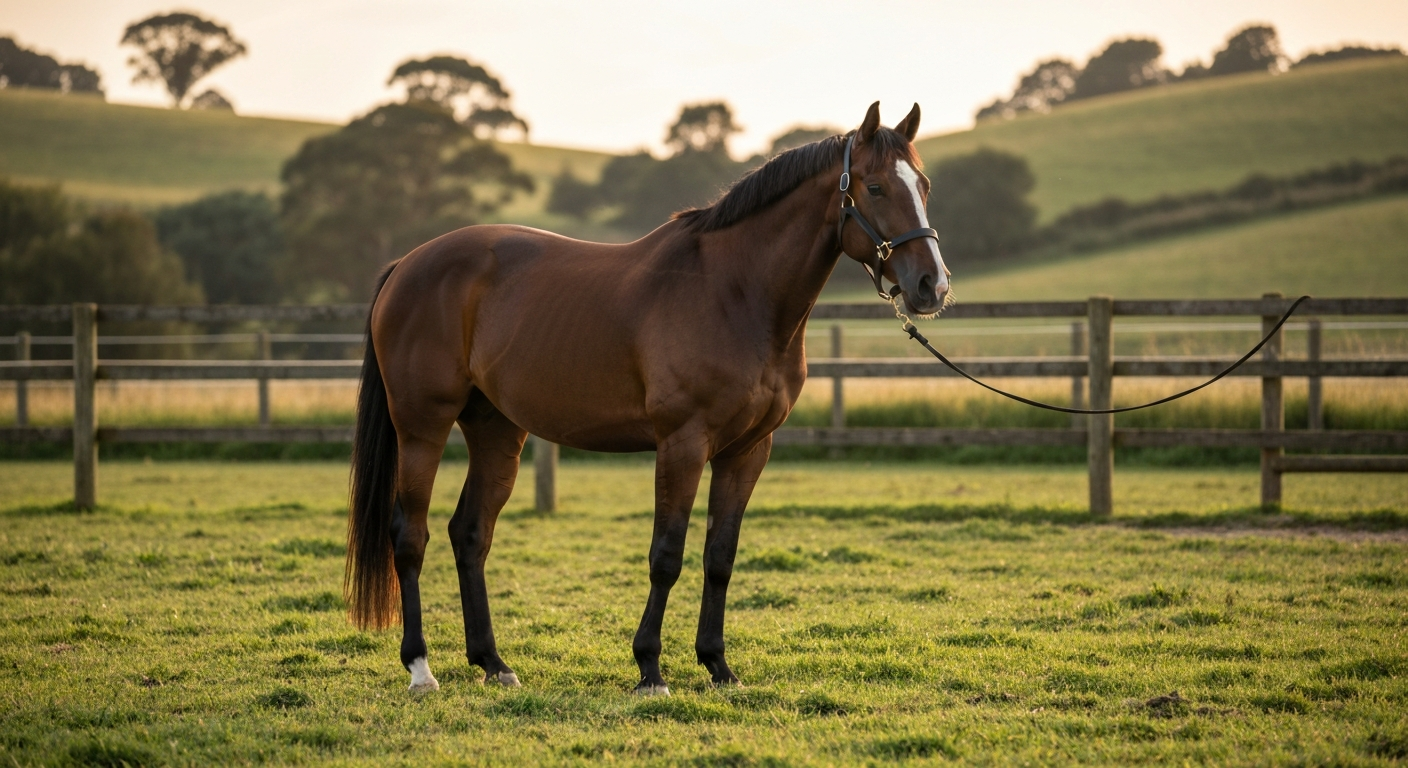
Excess weight develops gradually and is often recognized too late. The Henneke Body Condition Score offers a standardized rating system from 1 (emaciated) to 9 (obese). From a score of 7, action is needed. Concrete signs: ribs not palpable without pressure, distinct fat pads along the crest, over the croup and at the tailhead.
Behavior changes also signal feeding errors. A horse that suddenly goes "hot," shows lack of focus or tends to buck may be suffering from excess energy. Frequent sweating at low exertion also points to metabolic problems from overfeeding. In such cases, the amount of concentrate should be cut by 30 to 50 percent and the horse observed for two weeks.
Health consequences range from laminitis to fatty liver to orthopedic problems caused by excess weight. According to a 2016 study by the University of Liverpool, overweight horses have a 3.5-fold increased risk of laminitis. Treating these conditions is not only expensive – it massively impairs the horse's quality of life and your time together in the saddle.
Modern Feeding Technology and Professional Help
Digital ration-calculation programs such as Opti-Ration or FeedXL allow precise feed planning that takes all nutrients into account. These tools are based on scientific databases and consider interactions between different feed components. For horse owners with several animals or special requirements, they are a sensible investment from about $110 a year.
Professional ration calculations by feeding consultants or veterinarians with additional qualifications cost between $90 and $165 but usually also include hay analyses and individual adjustments. This service is especially worthwhile for sport horses, broodmares or animals with metabolic disease. Analyzing your own hay often brings surprising results – energy content varies between 7 and 10 MJ DE per kilogram depending on cutting time and storage.
Regular weight checks with portable horse scales or stationary scales at clinics provide objective data. Many vet practices and larger boarding barns offer this service. Alternatively, weight tapes, available for about $17, help, though their accuracy is limited to plus or minus 66 lb (30 kg).
FAQ: Common Questions About Dosing Concentrate Feed
How much concentrate does my horse really need daily?
The amount depends on weight, work and roughage quality. Many recreational horses get by on 0 to 4.5 lb (0 to 2 kg), while sport horses may need 6.5 to 11 lb (3 to 5 kg). First calculate the energy need and subtract the roughage portion – concentrate covers the difference.
Which grains are the best energy sources for horses?
Oats are considered the ideal horse concentrate because of their good digestibility and moderate starch release. Barley and corn are more energy-dense but require caution in dosing. Corn should make up at most a third of the concentrate ration.
How does concentrate need differ between warmbloods and Thoroughbreds?
Through selective breeding, Thoroughbreds have a basal metabolic rate about 20 percent higher than warmbloods of the same weight. They need more energy for the same work but use concentrate more efficiently and react more sensitively to feeding errors.
Can too much concentrate harm my horse?
Yes, overfeeding leads to excess weight, laminitis, colic and metabolic disease. Behavior problems such as nervousness also arise from excess energy. The rule: at most 0.5 pound of concentrate per 100 pounds of body weight per meal.
How do I adjust the amount of concentrate when training varies?
Reduce the concentrate by 20 to 30 percent for each training day that drops out. During breaks between shows or illness, feed only the maintenance requirement. Roughage stays constant at at least 1.5 pounds per 100 pounds of body weight daily.
Conclusion: Individual Dosing Instead of a Standard Recipe
Dosing grain is not a matter of rules of thumb but requires individual calculation by horse type, training intensity and metabolism. The basis is always high-quality roughage in sufficient quantity – concentrate only supplements what hay and pasture cannot provide. With systematic needs assessment, regular weight checks and flexible adjustment to workload, you create optimal conditions for your horse's health and performance.
Start today with an honest inventory: weigh your horse, assess its Body Condition Score and calculate the actual energy need. If you're unsure, have your hay analyzed and bring in a feeding consultant for complex cases. The investment in optimal feeding pays off many times over in vitality, willingness to perform and lower vet costs.